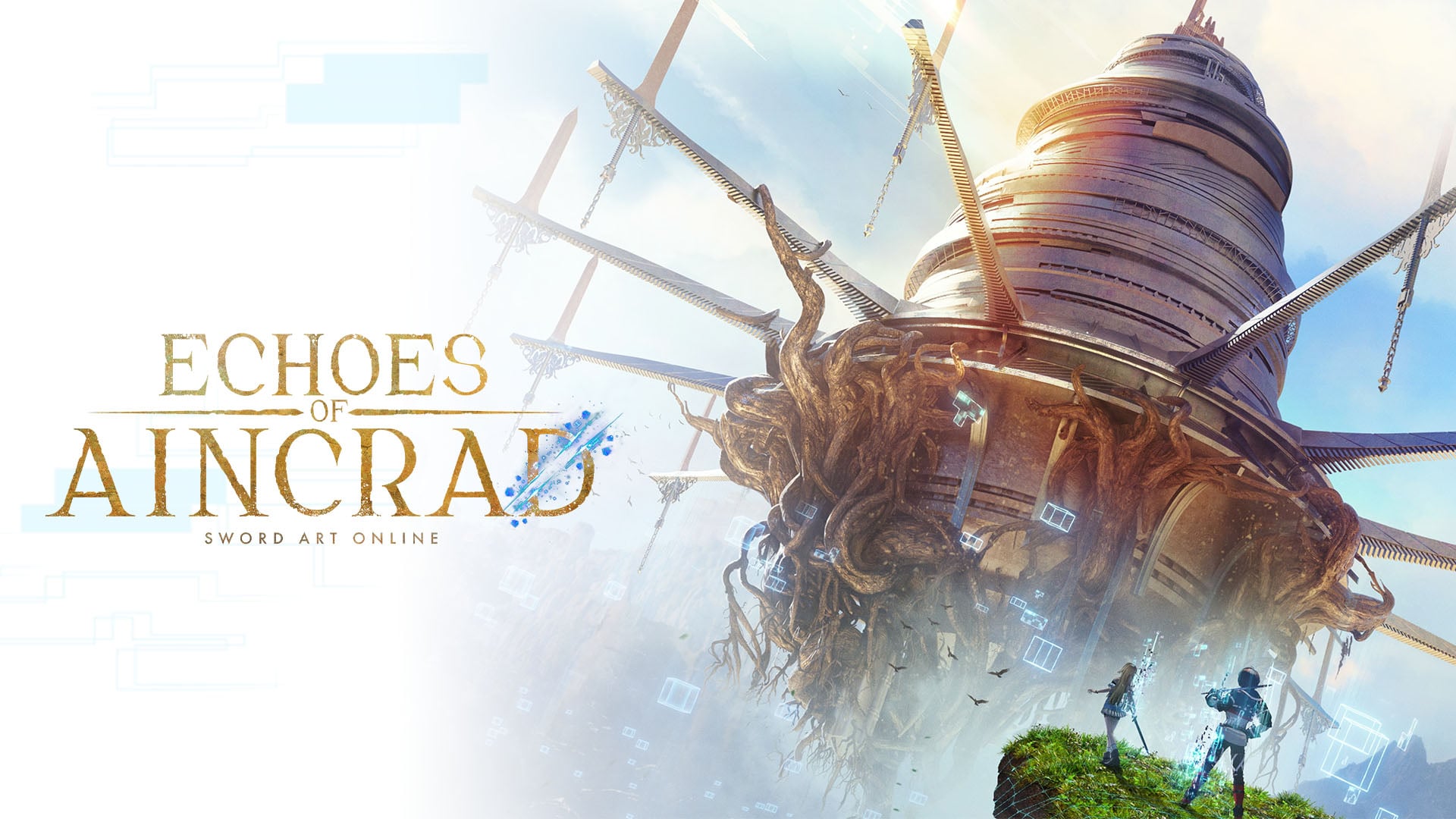
At Shapefarm, we collaborated with GameStudio on SAO: Echoes of Aincrad, an anime-style open-world action RPG developed in Unreal Engine 5.
I served as Lead Technical Artist, managing and mentoring a fully remote technical art team of up to three specialists while working closely with environment, VFX, and audio departments.
My role focused on building scalable world-building systems, developing high-performance pipelines, and ensuring the game world remained both visually rich and performant across target platforms.
Below is an overview of my core responsibilities.
World Building Pipeline
To enable efficient large-scale world production, I designed and implemented a procedural world-building pipeline that allowed multiple departments to contribute to the environment simultaneously without creating technical bottlenecks.
Working closely with our environment, VFX, and audio teams, I developed a system that unified environmental content creation into a single workflow.
Key features included:
• Biome Painting System
Artists could paint biomes directly onto the landscape, automatically spawning context-appropriate assets such as vegetation, rocks, and environmental props.
• Multi-Layer Procedural Spawning
Each biome layer supported multiple asset types including meshes, Niagara particle systems, decals, and ambient effects.
• Dynamic Ambient Systems
The biome system automatically populated the world with environmental life such as birds, insects, drifting particles, and wind effects, creating a believable living world.
• Audio Integration
Biome data was also used to drive contextual ambient soundscapes, seamlessly blending environmental audio depending on player location.
• Authoring Tools for Artists
Custom editor tools allowed designers and artists to quickly adjust spawn density, distribution patterns, and biome transitions without requiring engineering support.
This pipeline allowed us to populate large environments quickly while maintaining artistic control and consistency across the world.
Optimization & Performance Tooling
Ensuring the world performed well across different hardware targets was a key focus of my role.
To support this, I created a suite of optimization and debugging tools within Unreal Engine that allowed the team to both configure and analyze performance efficiently.
These tools helped artists and designers understand performance impacts directly inside the editor.
Core systems included:
• HLOD Setup & Visualization Tools
Custom utilities simplified the setup, generation, and debugging of Hierarchical Level of Detail (HLOD) clusters, ensuring large environments streamed efficiently.
• Automated Asset Validation
Editor scripts detected problematic assets such as overly dense meshes, missing LODs, incorrect collision setups, or expensive materials.
• Advanced Culling Configuration
Tools for configuring and visualizing distance culling, occlusion settings, and streaming distances to maintain high rendering efficiency.
• Scalability Debugging Tools
Systems for testing different scalability tiers and platform profiles, ensuring assets behaved correctly across performance settings.
• Batch Optimization Workflows
Automated tools for batch processing tasks such as LOD generation, mesh simplification, material instancing, and texture compression.
Through these tools, the team was able to maintain visual fidelity while ensuring the open world remained performant and scalable.
Cross-Disciplinary Technical Leadership
Beyond building systems, a large part of my role was acting as a technical bridge between art and engineering.
Responsibilities included:
• defining technical standards and asset budgets
• mentoring artists on engine best practices and optimization techniques
• supporting production with tool development and workflow automation
• ensuring visual features remained scalable and production-ready
This approach allowed the team to iterate quickly while keeping technical complexity manageable.